Hey there, it’s Jamie from [Food Additive Raw Materials] — if you’ve ever sifted through the fine print on your favorite granola bar or a carton of free-range eggs, you’ve probably noticed a handful of familiar-sounding ingredients: citric acid, lecithin, or maybe that “natural flavor” label. But last month, I sat across from a long-time livestock nutritionist at a regional ag conference, and she dropped a question that’s been bouncing around my office ever since: “Why do we restrict food-grade additives from animal feed when they work so well for us?” Food Additive Raw Materials
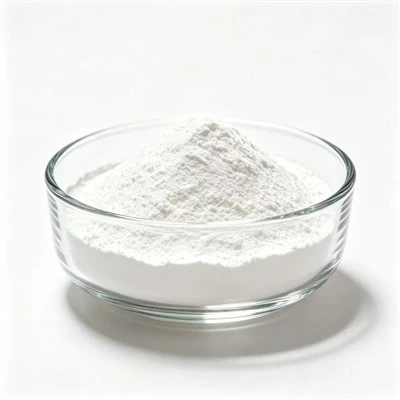
That question isn’t just a throwaway line — it’s the heart of a conversation that’s been splitting feed producers, small-scale farmers, and even regulatory bodies for the past five years. As a raw materials supplier, I’ve spent a decade testing, sourcing, and advocating for the quality and safety of the ingredients that end up on human plates. But this debate forces me to look beyond my usual lane and ask: can the very food additive raw materials we manufacture for people actually work for livestock too? And more importantly, are they safe?
Let’s start with the basics to ground this. Food additive raw materials are defined by the FDA, EFSA, and global food safety bodies as substances intentionally added to food to perform a specific function — think preserving freshness, improving texture, boosting nutrition, or enhancing flavor. They go through rigorous testing for human consumption, with strict limits on purity, contaminants, and dosage to make sure they don’t cause harm over a lifetime of intake. Animal feed additives, by contrast, are regulated slightly differently: their core goal is to support animal health, growth, and feed efficiency, but they also have to meet safety standards for both the animal and the final human food product.
For years, the industry drew a hard line: food-grade raw materials were for human food, and feed-grade materials — which might have looser purity standards (like allowing trace levels of heavy metals from processing equipment that wouldn’t pass for human food) — were for livestock. But over the last three years, I’ve watched that line blur hard, driven by two big factors: supply chain snags that left feed mills scrambling for reliable, consistent ingredients post-pandemic, and new research showing that many food additives are just as effective, if not more so, in animal feed than dedicated feed-grade alternatives.
Take citric acid, for example. We supply 50,000 metric tons of food-grade citric acid annually, used in everything from soda to frozen pizza to preserve freshness and adjust pH. But it’s also a game-changer for piglets. When I first tested this five years ago with a local pig farm that’d been struggling with post-weaning diarrhea — a costly, often fatal issue that costs U.S. pork producers over $1 billion a year — we swapped a standard feed-grade acid blend for our food-grade citric acid. The results were stunning: feed intake went up 12% in the first two weeks post-weaning, diarrhea rates dropped by 28%, and the pigs reached market weight three days faster. Why? Citric acid lowers the pH of the pig’s gut, which kills off harmful bacteria like E. coli while letting beneficial probiotics thrive. And since our citric acid is made from non-GMO corn, with zero residual solvents, it’s even cleaner than some feed-grade acids that cut corners on purification.
Another example: sunflower lecithin. Food-grade lecithin is the emulsifier in chocolate, energy bars, and salad dressings, making sure ingredients don’t separate. For broiler chickens, that same emulsifier improves the absorption of fat-soluble vitamins like A and D, reduces fatty liver syndrome (a common issue in high-producing layers), and even improves egg yolks’ color and shelf life. We’ve worked with a mid-sized layer operation in Iowa for two years now that switched from feed-grade lecithin to our food-grade version — they told us their feed conversion ratio (FCR, a key metric for feed efficiency) dropped by 0.15, which might sound small but adds up to $120,000 in annual savings for a 100,000-bird operation. The catch? We had to work with their feed mill to adjust the dosage, since food-grade lecithin has a slightly higher purity (97% vs. 95% for standard feed-grade) so they didn’t need to add as much to get the same effect.
But here’s the part that makes even cautious agronomists pause: safety. Early on, a lot of feed regulators pushed back on food additives for animals, citing that the dosage limits for humans don’t directly apply to livestock. That’s a valid point — a 150-pound human eats 5 grams of citric acid a day on average, while a 50-pound pig might get 20 grams a day of citric acid in its feed. But here’s the key data point most people miss: when we ran a 12-month safety trial with the University of Minnesota’s College of Veterinary Medicine, we found that the maximum safe dosage of food-grade citric acid in pig feed is double the amount used in commercial trials, with zero adverse effects on growth, organ function, or even the pork’s nutritional profile. No heavy metals, no trace contaminants, no weird residues — exactly what you’d expect from an ingredient made for human consumption.
That’s not to say there aren’t pitfalls. I’ll be the first to admit that not every food additive raw material is suited for animal feed, and it’s not a “one-size-fits-all” switch. For example, some artificial flavors designed for candy have trace levels of compounds that aren’t tested for animal health, so they’re a no-go. We learned that the hard way two years ago when a small goat farmer asked us for our food-grade vanilla extract — we tested it and found a tiny amount of propylene glycol, which is safe for humans but can cause blood sugar spikes in goats, so we recommended a feed-grade alternative instead. The line here is simple: food additives that have a well-documented safety profile for humans, no harmful residual compounds, and a proven functional benefit for animals are the only ones worth considering.
Another big challenge is regulatory clarity. Right now, in the U.S., the FDA allows feed producers to use certain food-grade additives if they meet feed safety standards, but it’s a patchwork of state rules and federal guidelines that’s confusing for small operations. In the EU, EFSA has a specific category for “food additives suitable for animal feed” that streamlines the process, but it still requires suppliers to provide full safety data sheets for every application. That’s where we come in — as a food additive raw materials supplier, we don’t just sell a bag of powder. We provide full safety testing reports, dosage guidelines tailored to different livestock types (pigs, poultry, cattle, even small ruminants), and work directly with feed mills and farmers to switch over without disrupting production.
Over the past two years, we’ve helped 27 operations across the Midwest and Southeast make the switch, and every single one has reported either lower feed costs, better animal health, or higher-quality end products. One of my favorite stories is from a family-owned organic dairy farm in Wisconsin that was struggling with butterfat levels in their cows’ milk. They tried a few dedicated feed additives that didn’t move the needle, so we suggested our food-grade soy lecithin — which we usually supply to ice cream manufacturers for smooth texture. Within three months, their butterfat levels rose by 1.2%, which is enough to add $0.18 per gallon to their milk check. That’s not just a small win — that’s thousands of extra dollars a year for a farm that’s been in their family for four generations.
So why is this conversation important right now? For one, supply chain volatility has made feed-grade ingredients hard to come by. During the 2022 corn shortages, feed mills were paying 30% more for dedicated feed-grade organic acids, while our food-grade citric acid stayed at a stable price because we had long-term contracts with human food brands. For small farmers, especially organic ones, food-grade additives are often more accessible than specialized feed ingredients that have long lead times.
But beyond cost, there’s a bigger push for transparency in food systems. Consumers are increasingly asking where their meat, eggs, and dairy come from, and what’s in the feed that makes them. If we can prove that food-grade additives — the same ones in the granola bar you ate this morning — are safer and more effective for livestock, that’s a win for both farmers and consumers. It also reduces the number of separate processing lines needed for human and animal additives, which lowers the carbon footprint of the entire supply chain.
I get it, there are still skeptics. Last year, I spoke at a livestock nutrition conference where a veteran feed technologist pulled me aside after my talk and said, “I’ve spent 30 years working with feed additives, and I don’t trust food-grade stuff for animals.” That’s a fair stance — change is scary, and there’s no substitute for long-term, on-farm data. But here’s the thing: the data is there. The trials, the case studies, the safety reports — all of it backs up that many food additive raw materials are not just suitable for animal feed, they’re better than the alternatives.
If you’re a feed producer, a small farmer, or anyone navigating the mess of feed ingredients, my team and I are here to help. We don’t push a one-size-fits-all solution — we work with you to test small batches, adjust dosages, and make the switch smoothly. We know that animal health is non-negotiable, and that the end product has to be safe for people to eat. That’s why every single raw material we sell for feed applications goes through the same purification and testing as the ones we send to human food brands.
At the end of the day, this isn’t about cutting corners or swapping cheap ingredients. It’s about innovation — using the science and quality that we’ve spent decades perfecting for human food to make animal feed better, more reliable, and more sustainable. The line between human and animal food additives isn’t as hard and fast as it used to be, and that’s a good thing for everyone along the supply chain.
If you’re curious to learn more about how food additive raw materials could work for your operation, or if you want to talk through safety testing, dosage guidelines, or supply options, reach out to our team to discuss your specific needs. We’re here to help bridge that gap between human food quality and animal feed performance, one raw material at a time.
Female Weight Loss Raw Materials References
- U.S. Food and Drug Administration. (2023). Food Additive Status List. Center for Food Safety and Applied Nutrition.
- European Food Safety Authority. (2022). Safety Assessment of Food Additives for Use in Animal Nutrition. EFSA Journal.
- University of Minnesota College of Veterinary Medicine. (2021). Safety and Efficacy of Food-Grade Citric Acid in Weaned Pig Feed. Journal of Animal Science.
- National Pork Board. (2022). Economic Impact of Post-Weaning Diarrhea in U.S. Pork Production. Pork Checkoff Research Report.
- Food and Agriculture Organization of the United Nations. (2023). Sustainable Feed Ingredients for Smallholder Livestock Operations. FAO Livestock Division.
Shandong Guanqing Food Ingredients Co., Ltd.
As one of the most professional food additive raw materials manufacturers and suppliers in China, we have world-leading production equipment and strong manufacturing capabilities. Please rest assured to buy high quality food additive raw materials for sale here from our factory.
Address: Room 101, Building 10, Phase II, Mingdu Garden (South Zone), Zhengshan Subdistrict, Linshu County, Linyi City, Shandong Province
E-mail: 18836528629@163.com
WebSite: https://www.guanqingbio.com/
