When I first started working as a Babbitt Combination Bearings supplier over ten years ago, I learned a crucial lesson early on: no bearing lasts forever, but catching damage before it causes catastrophic failure can save clients thousands in downtime and replacement costs. I still remember the call from a local manufacturing plant three years ago—their paper mill had shut down unexpectedly because a damaged bearing had seized, leaving them unable to process orders for three days. By the time they reached out to us, the Babbitt layer was completely fused to the shaft, and the shaft itself needed machining to repair. That experience taught me how critical it is to recognize the subtle signs of damage in these bearings, which are used in everything from heavy industrial machinery to marine engines, and built a reputation for reliability by helping clients spot issues before they become crises. Babbitt Combination Bearings

Babbitt combination bearings, for those who might not know, are different from plain steel bearings or roller bearings because they have a soft Babbitt metal lining—usually tin or lead-based—bonded to a stronger steel or bronze backing. This soft lining is designed to wear slightly instead of damaging the rotating shaft, making them ideal for high-load, low-speed applications where precision is key. But that same soft lining is also vulnerable to damage if something goes wrong with lubrication, alignment, or load. Over the years, I’ve worked with engineers, plant managers, and maintenance teams to break down the most common signs of damage, and I’ve seen firsthand how paying attention to these signs can prevent costly disasters.
The first and most obvious sign is unusual noise during operation. When a bearing is working properly, it’s almost silent or makes a low, steady hum. If you start hearing grinding, squealing, or clicking sounds coming from the bearing housing, that’s a red flag. Let me explain why: the Babbitt layer is smooth, so if small particles of dirt, metal shavings, or degraded lubricant get between the bearing and the shaft, they can scratch the soft Babbitt. These scratches create irregularities that cause the metal surfaces to rub together instead of sliding smoothly, leading to that grinding noise. I once had a client in the mining industry who noticed a faint grinding sound in their conveyor system’s bearings. We sent a technician out to inspect, and we found tiny metal shavings from a misaligned gear in the lubrication system embedded in the Babbitt. We cleaned the bearings, replaced the lubricant, and realigned the gear, and that noise stopped immediately. If we’d ignored that noise, those shavings would have carved deeper grooves into the Babbitt, leading to a seizure within weeks.
Another key sign is increased vibration or movement in the shaft. Healthy Babbitt bearings provide a tight, stable fit for the shaft, so vibration should be minimal—usually no more than a few thousandths of an inch. If you start noticing excessive vibration, either felt through the machinery’s frame or measured with a vibration meter, that means the Babbitt lining is wearing unevenly, creating gaps between the bearing and the shaft. This uneven wear often happens when the bearing is under too much load, or when lubrication has failed and the Babbitt is rubbing directly against the shaft, wearing away faster in some areas than others. A shipyard client told me last year that their tugboat’s engine started vibrating heavily while they were docked for routine maintenance. When we pulled the bearing, we found that the Babbitt layer had worn down by a millimeter on one side, leaving a gap that allowed the shaft to move. The vibration was caused by the shaft shifting in that gap. We re-babbitted the bearing, adjusted the engine’s load distribution, and the vibration disappeared. The tugboat’s crew had noticed a slight shake a few weeks earlier but dismissed it as normal for a heavy engine—small movement like that is easy to overlook, but it’s often one of the first physical signs of damage.
Lubricant contamination is another big indicator, and it’s something clients can check easily during routine maintenance. When you drain the lubricant from a bearing housing, look for signs of metal particles, sludge, or a discolored appearance. Fresh, clean lubricant should be amber or light brown, and free of debris. If you see shiny metallic flakes in the lubricant, that’s almost certainly Babbitt material wearing off the lining. If the lubricant is thick, black, or has a sludge-like consistency, that means it’s degraded from heat or contamination, and it’s no longer providing the protective barrier between the bearing and the shaft. I always advise clients to do lubricant analysis every three to six months, especially for high-load or continuously operating machinery. A food processing plant client once found small Babbitt flakes in their gearbox lubricant during a routine change. We inspected the bearings and found that the lubricant had broken down because the gearbox’s cooling system was clogged, causing the Babbitt to overheat and wear. Flushing the system, replacing the lubricant, and installing a new cooling filter fixed the issue—if we’d waited longer, the Babbitt would have melted completely, leading to a complete gearbox failure.
Heat buildup is also a critical sign, and it’s often the most alarming because it can happen quickly if left unaddressed. Babbitt has a relatively low melting point—around 450 to 600 degrees Fahrenheit, depending on the type—so if the bearing runs too hot, the lining can soften, warp, or even fuse to the shaft. You can check for heat by feeling the bearing housing during operation (with proper safety equipment, of course) or using a thermal camera. A slightly warm housing is normal, but if it’s hot to the point where you can’t hold your hand on it for more than a few seconds, that’s a problem. Overheating usually comes from insufficient lubrication, misalignment, or excessive load. I had a construction company client whose crane’s boom bearing overheated during a lift. When we arrived, the bearing housing was so hot it had burned the paint off the metal. We found that the lubrication line to the bearing had been blocked by a broken seal, so there was no oil between the Babbitt and the shaft. By the time we arrived, the Babbitt was already partially fused to the shaft. We had to re-babbitt the bearing and replace the seal, and the crane was out of service for a week, costing them thousands in rental fees for a replacement crane. That could have been avoided if they’d checked the bearing temperature before the lift.
Visual inspection is also essential, even for bearings that aren’t showing obvious signs. When you open a bearing housing, look closely at the Babbitt lining. Normal Babbitt should have a smooth, shiny surface. If you see cracks, pitting, or areas where the Babbitt is flaking off, that’s damage. Cracks often form from thermal stress or repeated heavy loads, while pitting can come from corrosion caused by contaminated lubricant or moisture. Flaking usually means the Babbitt isn’t bonded properly to the steel backing, which can happen during manufacturing, but it can also develop over time if the bearing is overloaded. I once inspected a bearing for a power generation plant that had fine cracks running across the Babbitt surface. The plant operators had been running the generator at maximum load for extended periods, and the thermal cycling from start-up and shut-downs had caused the Babbitt to crack. We recommended replacing the bearing with a higher-load capacity model, and they adjusted their operating schedule to reduce thermal stress, preventing a potential failure during peak demand.
One less obvious sign is increased friction or higher energy consumption from the machinery. If a machine that previously ran at a consistent power level starts drawing more electricity or fuel, that could be because the damaged bearing is creating more resistance, so the engine or motor has to work harder. This is often a sign that damage is more advanced, so it’s important to track energy usage over time. A trucking company client noticed that their heavy haul trucks were getting worse gas mileage than usual. They checked the engine, tires, and fuel injectors, but everything seemed fine. When we inspected the wheel bearings, we found that the Babbitt linings were worn, creating extra friction that was making the engines work harder. Replacing the worn bearings restored their gas mileage to normal, saving them money on fuel over the long term.
As a Babbitt combination bearings supplier, I always emphasize to my clients that these signs don’t always mean the bearing needs to be replaced immediately. In many cases, catching damage early means we can repair the Babbitt lining, recondition the bearing, and get the machinery back up and running with minimal downtime. For example, if the damage is just scratches from small particles, we can clean the bearing, polish the Babbitt surface, and adjust the lubrication system to prevent future contamination. If there’s uneven wear, we can machine the Babbitt back to a smooth, even surface and re-lubricate properly. Only when the Babbitt is fused to the shaft, has deep cracks or flaking that can’t be repaired, or the steel backing is damaged do we recommend a full replacement.
I also want to note that regular maintenance is the best way to prevent bearing damage in the first place. This includes routine lubricant changes, checking alignment of shafts and bearings, monitoring vibration and temperature, and doing visual inspections every few months. Working with a trusted supplier like me means you don’t have to navigate these issues alone—we can help you set up a maintenance schedule tailored to your specific machinery, and we’re always available to answer questions when you notice something unusual.
At the end of the day, the goal is to keep your machinery running smoothly without unexpected breakdowns. The signs of damage in Babbitt combination bearings aren’t always obvious, but they’re there if you know what to look for. Whether it’s a faint grinding noise, a slight vibration, or a small particle in your lubricant, don’t ignore it. Reach out with any concerns or to learn more about how our bearings can meet your needs and how we can help you spot and address damage early. We’re here to support your operations every step of the way.
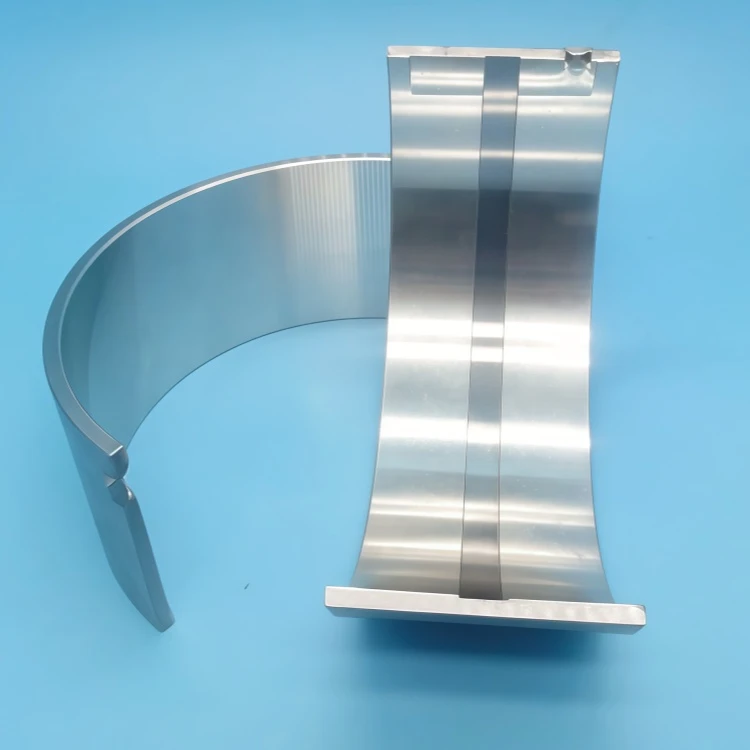
If you have questions about bearing inspection, maintenance, or replacement, or if you’d like to discuss your specific application needs, feel free to get in touch. We’re ready to help you find the right solution for your equipment.
Babbitt Journal Bearings References:
- Nichols, E. (2018). Babbitt Bearings: Design, Application, and Maintenance. Industrial Press.
- ASME B106.1M-1985 (R2013). Measurement of Vibration of Rotating Shafts for Machinery. American Society of Mechanical Engineers.
- Taylor, D. (2020). "Failure Analysis of Babbitt Bearings in Heavy Industrial Applications." Journal of Tribology and Industrial Machinery, vol. 42, no. 2, pp. 112-121.
- Lubrication Engineers. (2021). Guidelines for Lubricant Condition Monitoring in Rotating Machinery. Lubrication Engineers International.
- Marine Metal Suppliers Association. (2019). Babbitt Bearing Best Practices for Marine and Offshore Equipment. MMSA Publications.
Wenzhou Zhengbang Bearing Co., Ltd.
We are one of the most professional babbitt combination bearings manufacturers and suppliers in China. With abundant experience, we warmly welcome you to buy customized babbitt combination bearings at competitive price from our factory. If you have any enquiry about free sample, please feel free to email us.
Address: Units 1-1 and 3-1, Building 12, Yongxing Nanyuan Small and Micro Enterprise Startup Park, Binhai 2nd Road, Yongxing Subdistrict, Longwan District, Wenzhou City, Zhejiang Province.
E-mail: zbbearing@zbbearing.com
WebSite: https://www.zb-bearings.com/
