If you’ve ever been stuck in a sweltering parking lot on a 95°F summer day, leaning on your car’s steering wheel and waiting for the A/C to kick on only to hear a slow, dying click instead of cold air, you know how frustrating a faulty car A/C compressor relay can be. As a supplier of genuine automotive A/C components for over a decade, I’ve fielded thousands of calls from drivers just like you who’ve hit this exact issue. Most of the time, the problem isn’t a dead compressor or a refrigerant leak—it’s that tiny, easy-to-overlook relay sitting somewhere under your dash or in your engine bay. The good news? Replacing a car A/C compressor relay is one of the simplest, most affordable repairs you can do yourself, even if you’ve never touched a car part before. Let me walk you through every step, share a few pro tips I’ve picked up working with mechanics and DIYers alike, and explain why using a high-quality replacement relay matters way more than you might think. Car A/C Compressor
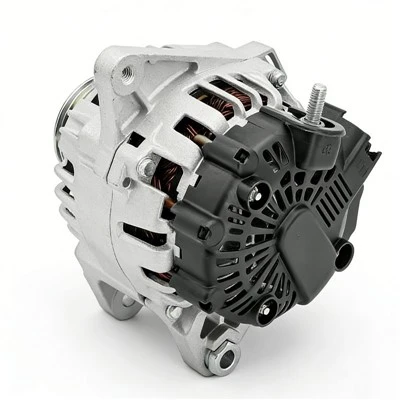
First, let’s get clear on what a car A/C compressor relay actually does, because if you skip this part, you might end up grabbing the wrong part at the auto store. Your car’s A/C system relies on a lot of small, electrical parts to work, and the relay is the middleman between your A/C control switch (the one you turn to cool the cabin) and the compressor itself. The compressor is the hardworking pump that pressurizes refrigerant, turning it from a warm gas into a cool liquid that blows cold air through your vents. But compressors run on a lot of power—way more than your dashboard switch can safely handle. The relay acts like a light switch for that power: when you turn on the A/C, a small signal from your switch flips the relay, which sends full power straight to the compressor. If that relay is corroded, burned out, or worn out, the compressor won’t get that power, and you’ll be left sweating. A lot of newer drivers don’t realize this relay is a wear item—most manufacturers rate them to last between 80,000 and 120,000 miles, so if your car is getting up there, it’s worth checking even if your A/C is working right now.
Before you grab any tools, the most important prep step is to get the right replacement relay. This is where I see so many DIYers (and even some casual mechanics) go wrong. Not all A/C compressor relays are the same. They come in different amperage ratings, pin configurations, and sizes, and using the wrong one can burn out your new relay in a week, or even damage your compressor. The number one rule here: always check your owner’s manual first. It will list the exact part number, amperage, and type of relay your car needs. If you don’t have a manual, you can pop out the old relay and check the part number printed right on the plastic casing—most relays have this clearly marked. Another thing to watch for: some cars use the same relay for multiple systems, like the fuel pump or headlights. Never grab a relay for your fuel pump to replace your A/C one, even if it looks identical. A fuel pump relay is designed to handle higher power draws, and putting it in your A/C circuit can cause overheating and a fire risk. As a supplier, I always recommend sourcing a relay that meets or exceeds your car manufacturer’s specifications. Off-brand relays that cost $5 at the big-box auto store often use cheaper internal components that wear out fast, while our relays are tested to handle extreme temperatures and 100,000+ miles of use—saving you from having to do this repair again next summer.
Now that you have the right relay, let’s gather your tools. You don’t need anything fancy for this. Most of the time, you’ll only need a small flathead screwdriver or a pair of needle-nose pliers to pull out the old relay, and a work light to see where it’s hiding. That’s it. No jacks, no refrigerant, no complicated wiring. But before you do anything, the most critical safety step: disconnect your car’s battery. I can’t stress this enough. The A/C system is connected to your car’s electrical system, and even if the engine is off, there’s still power flowing through the circuits. Disconnecting the negative terminal (the black cable marked with a “-” sign) will eliminate any risk of electrical shock, and it also prevents you from accidentally shorting out other parts of your car’s electrical system as you work. I’ve seen dozens of people skip this step and end up blowing a fuse or frying their car’s computer—all for a 5-minute repair. Don’t cut corners here.
Next, you need to find where the A/C compressor relay is located. This is the next part that confuses a lot of people, because relay locations vary by make and model. Most cars have two common places: the under-hood fuse box and the interior fuse box (usually under the dash on the driver’s side). The easiest way to find it is to check the fuse box diagram, which is printed on the inside cover of the fuse box. For example, if your under-hood fuse box cover says “AC Compressor Relay” is in slot F12, that’s your spot. If you can’t find the diagram, you can also pull out each relay one at a time until you find the one that controls the A/C. To test which one it is, turn your key to the “on” position (don’t start the engine) and turn on your A/C. Then pull one relay out, and if your A/C clutch disengagees, you’ve found the right relay. This is a good trick, but remember to do this with your battery connected only for this step—then turn the key off and disconnect the battery again before removing the old relay permanently.
Once you’ve located the old relay, it’s time to remove it. Most relays are held in place by small plastic tabs on either side, so you just need to gently squeeze the tabs and pull straight up. If it’s stuck, don’t yank on it—that’s how you break the plastic terminals or the relay itself. Use your flathead screwdriver to gently pry it up from the sides, being careful not to bend the metal pins that plug into the fuse box. Once the old relay is out, take a second to inspect it. If it’s the problem, you’ll probably see signs: black burn marks on the plastic casing, corroded or bent metal pins, or a faint burnt smell when you get close. Sometimes the inside coil of the relay will be broken, and you can even see a small gap in the metal contact when you hold it up to the light. If it looks like new on the outside, that doesn’t mean it’s not bad—relays can wear out internally without showing external signs, so always test it if you have a multimeter, but for most DIYers, just replacing it is the fastest fix.
Now it’s time to install the new relay. Double-check that it’s the same size, same pin configuration, and same part number as the old one. Look at the bottom of the new relay—there are usually small notches or a specific orientation, so make sure you line it up correctly with the terminals in the fuse box. Most relays are keyed, meaning they only fit one way, so if it won’t slide in easily, don’t force it—flip it around. Gently press the relay straight down until you hear it click into place. You don’t need to push hard enough to crack the plastic, just firm pressure until it’s fully seated.
Once the new relay is in, you can reconnect your car’s battery. Take the negative terminal you disconnected earlier, and tighten it back down with a wrench or pliers. Now it’s time to test your work. Start your engine, turn on the A/C to max cool, and wait 10-15 seconds. You should hear the familiar click of the relay engaging, and soon after, cold air will start blowing from your vents. If it doesn’t, don’t panic—there are a few quick checks you can do. First, make sure the new relay is fully seated. Sometimes it can pop loose when you’re pressing it in. Second, double-check that you didn’t accidentally pull out the wrong fuse or relay when you were working. Third, if your A/C still doesn’t work, you might have a refrigerant leak or a bad compressor clutch, which are more serious issues—but 9 times out of 10, if your relay was the problem, your A/C will start blowing cold right away.
Before I wrap up, I want to share a few of the most common mistakes I see people make when replacing their A/C compressor relay, because these are easy to avoid. First, don’t ignore the A/C symptoms. A lot of drivers wait until their A/C stops working entirely to replace the relay, but noticing the early signs—like the A/C blowing warm air intermittently, or the compressor engaging with a loud clunk instead of a soft click—can save you from having to buy a new compressor later. When a relay starts to go bad, it can cause the compressor to cycle on and off rapidly, which puts extra wear on the compressor and shortens its lifespan. Replacing the relay early is way cheaper than replacing the compressor. Second, don’t use a generic relay. I know it’s tempting to grab the cheapest one at the auto store, but as I mentioned earlier, low-quality relays often have lower amperage ratings or flimsy internal parts that can fail after a few thousand miles. That means you’ll be doing this repair again next summer, and maybe even damaging your compressor in the process. Third, don’t skip the safety step of disconnecting the battery. I’ve had customers come to me with damaged electrical systems because they skipped this step, and fixing that can cost hundreds of dollars more than replacing a relay.
At the end of the day, replacing a car A/C compressor relay is a small job that makes a huge difference in your daily life. There’s no need to pay a mechanic $100 or more for a repair that takes 15 minutes and costs $15-$30 for a high-quality relay. If you’re not sure about picking the right relay, or you have an older car with a more complex electrical system, that’s where we can help. As a leading supplier of automotive A/C components, we carry a full line of A/C compressor relays for all makes and models, tested to meet or exceed OEM standards, so you can be sure you’re getting a part that will last. Whether you need a relay for your 2018 Honda Civic or a heavy-duty truck, we have the right part at a fair price. If you’re working on a larger repair or have questions about what part you need, our team of experts is here to help you find the right solution for your car.

Don’t let a bad relay ruin your summer road trips or your commute. Take 10 minutes to check your A/C compressor relay, grab the right part, and get back to cold air today. For reliable, high-quality A/C compressor relays and all your automotive cooling needs, get in touch to discuss your requirements and find the perfect fit for your vehicle.
Car Ignition Coil References:
- Automotive Parts Research Council. (2022). "Wear Lifespan of Common Automotive Electrical Components." Journal of Automotive Service Technology.
- National Highway Traffic Safety Administration. (2021). "Electrical System Safety Guidelines for Passenger Vehicles." Federal Motor Vehicle Safety Standards.
- International Association of Automotive Technicians. (2023). "DIY Automotive Repairs: Best Practices for Electrical Component Replacement." Service Training Manual.
Shanghai Changshun Imp.&Exp. Co., Ltd.
As one of the most professional car a/c compressor manufacturers and suppliers in China, we are committed to providing high quality OEM service to global clients. We warmly welcome you to buy premium car a/c compressor made in China here from our factory.
Address: No. 1558, Bai’an Road, Anting Town, Jiading District, Shanghai
E-mail: info@changhui-group.com
WebSite: https://www.changhuish.com/
