Hey everyone, let’s cut to the chase – if you’re in textile manufacturing, you’ve probably heard of raising machines, right? The ones that take woven fabrics and brush them up to make that cozy, fuzzy surface on things like fleece or flannel. But here’s a question I get all the time from non-woven makers: “Wait, can that same old raising machine actually work for non-wovens?” As a textile raising machine supplier, I’m not just here to say “yes” or “no” – I’m here to break down the real deal, no fancy jargon or B.S. Textile Raising Machine
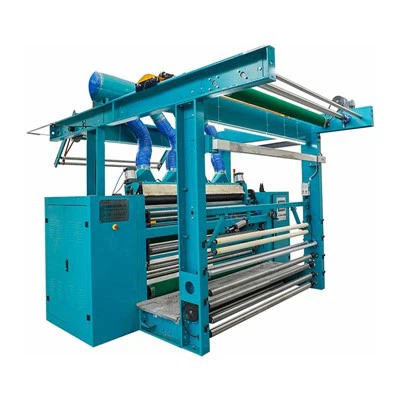
First, let’s make sure we’re on the same page about what each of these terms actually means. A textile raising machine (let’s call it TRM for short, we all hate typing out the whole thing every time) was literally designed for woven fabrics. Woven stuff has interlaced warp and weft threads – super structured, stable, not easy to unravel on their own. Non-wovens? Total opposite. They’re made from bonded fibers (no interlacing at all – think of things like spunbond, meltblown, or needle-punched non-wovens) that are held together by adhesives, heat, or just being poked tight. So at first glance, it might seem like trying to fit a square peg in a round hole… but that’s not the whole story.
I’ve been in this game for 12 years, working with everything from small boutique fleece shops to big non-woven facilities, and let me tell you – the line between what a TRM can and can’t do for non-wovens is way blurrier than people think. The core job of any raising machine, really, is to pull individual fibers to the surface of a fabric and stand them up (or fluff them) – that’s what creates that soft, textured look. For woven fabrics, that works because the tight weave keeps the structure intact while the machine’s wire brushes do their work. For non-wovens, that same fiber-pulling magic can work, but only if you tweak the machine and match the right non-woven type.
Let’s start with the non-woven types that actually play nice with TRMs. First up: needle-punched non-wovens. These are the most common for this use case because they’re already made by punching thousands of tiny barbed needles through fibers to interlock them – so they’ve got some structure, just like woven fabric, but they’re a lot fluffier. I’ve seen clients take a standard TRM, swap out the heavy-duty woven-fabric brushes for finer, less aggressive ones, and turn a plain needle-punched polypropylene non-woven into a soft, fuzzy blanket fabric that sells for 3x the original price. That’s not a gimmick – that’s actual production work, not just a lab test. Spunbond non-wovens can work too, but only if they’re a bit thicker and already have some binder to hold their shape. Thin, lightweight spunbond (like the stuff used for disposable masks) won’t hold up to a TRM – it’ll just tear apart – but the thicker spunbond used for shopping bags or insulation? Perfect. Meltblown non-wovens, though? Probably not – those are super fine, fragile, and meant for filtration, so a TRM would just destroy the fiber structure instead of raising it.
Now, what about the tweaks that make this work? Because you can’t just take a TRM off the shelf and throw non-wovens through it – trust me, I’ve seen a client try that in 2019 and they ended up with a pile of tangled fiber scraps and a very unhappy production team. First, brush selection is everything. Standard TRMs use coarse, hard wire brushes for woven fabrics to pull thick warp/weft threads. For non-wovens, you need softer brushes – usually nylon or finer stainless steel – with smaller barbs or wires, so they don’t snag or tear the non-woven’s weaker structure. Then there’s machine speed: woven fabrics can handle a fast feed rate because they’re stable, but non-wovens are slower, so you’ve to dial back the feed speed and make the brushes spin at a slightly different RPM to give the fibers time to lift without overworking them. Last thing: tension control. Wovens need tight tension to keep them straight under the brushes, but non-wovens are like thin sheets of fiber – too much tension and they stretch or rip. We’ve built custom tension guides for non-wovens specifically, and that’s been a game-changer for our clients.
Wait, but let’s be real – it’s not all sunshine and rainbows. There are limits. For one, not every non-woven is a candidate. I mentioned meltblown, but even some needle-punched non-wovens that use a lot of adhesive to bind fibers together? If the adhesive is too strong, the brushes can’t pull the individual fibers loose to the surface – you just end up with a smooth, unchanged fabric. Also, the end result won’t be exactly the same as a fabric made specifically for non-woven raising machines, but it’s close enough for a lot of applications. Like, if you’re making upholstery fabric or even some types of disposable towels, no one’s going to tell the difference between a TRM-raised non-woven and a non-woven made on a dedicated machine.
Here’s the big question our clients always ask: “Is it worth it?” Let’s break it down. If you’re a small to mid-sized manufacturer, buying a dedicated non-woven raising machine can cost 2-3x more than a used or even slightly reconditioned TRM. So using your existing TRM (with a few cheap tweaks) cuts costs big time. On the flip side, if you’re a large-scale producer making 100k+ yards of non-wovens a month, a dedicated machine will give you more consistent results – the TRM works, but it’s not optimized for non-wovens, so you might get more variation if you’re running it 24/7. I had a client in Texas who makes pet beds – they started with a used TRM we sold them 5 years ago, tweaked it for needle-punched non-wovens, and now they’re expanding to 3 lines. They told me that without being able to use their existing TRM for non-wovens, they would’ve had to put off expanding for 2 more years because of machine costs.
Another thing people overlook: TRMs are more versatile than you think. A lot of our clients don’t just use theirs for raising – they adjust the brushes and speed to do other stuff, like singeing minor fuzz or even light shearing. So if you ever decide to go back to woven fabrics (or mix woven and non-woven products, like a fleece jacket that has a non-woven lining), you don’t have to buy another machine. That flexibility is huge for small operations that don’t have the budget to stock 5 different production machines.
But wait, I need to address a common myth: some non-woven enthusiasts say that only machines built explicitly for non-wovens can do the job right. Yeah, that’s true if you’re making high-end, technical non-wovens for medical use or filtration. But 90% of non-wovens on the market are for things like apparel, home goods, or disposable products – and for those, a TRM works perfectly. I’ve seen non-wovens made on TRMs in Target blankets, Walmart’s budget bedding, even some of the cheaper dog beds at Petco. No one’s complaining about the quality, because it meets their needs.
Now, let’s get into the nuts and bolts of how the process actually works, just so you know it’s not some random hack. When you run a non-woven through a TRM, the brushes (with those softer wires) penetrate the top layer of fibers, grab individual strands, and pull them upward so they stand perpendicular to the fabric surface. That creates that soft, fluffy texture, just like with woven fabrics. The key is that non-wovens don’t have threads holding them together – so the interlocking fibers from the needle-punching do the work of keeping the fabric intact while the brushes do their thing. That’s why needle-punched non-wovens are the sweet spot here.
I want to be clear, though: this isn’t a “set it and forget it” kind of thing. You can’t just load a non-woven into a regular TRM and expect it to turn out great. You’ve got to test small batches first, adjust the brush type, speed, and tension, and maybe replace a few cheap parts (brushes are like $500-$1,000, which is nothing compared to a new machine) before you get it right. I always tell new clients that: test with a 10-yard sample first, don’t waste a whole roll. I’ve had clients come back to us after a bad first attempt, and once we helped them tweak the settings and get the right brushes, they were producing quality non-wovens on their TRM within a week.
So to circle back to the original question: Can a textile raising machine be used for producing non-wovens? The short answer is yes – but only for specific types of non-wovens, with the right adjustments, and only if you’re okay with the performance limits of using a repurposed woven machine. It’s not a one-size-fits-all solution, but for a lot of manufacturers, it’s a game-changer that saves money and adds versatility to their production line.
Here’s the thing: I’m biased, obviously, because I sell TRMs, but I’m not going to lie and say it works for every scenario. But if you’re a manufacturer who’s got an old TRM sitting around, or you’re looking for a way to cut costs on non-woven texturing, this is worth exploring. We’ve helped hundreds of clients across the globe adjust their TRMs for non-wovens, and the feedback is almost always positive. A lot of them didn’t even know it was possible until they talked to us – they thought raising machines were only for woven fabrics, and they were missing out on a huge, profitable segment of the non-woven market.

If you’re curious whether this would work for your specific non-woven product, reach out. We can send you small sample sizes, help you run tests on our demo machines, or even walk you through the exact tweaks you need to make on your existing TRM. No pressure, no hard sell – just honest advice from someone who’s been in the trenches with these machines for over a decade.
Textile Air Flow Machine At the end of the day, manufacturing is all about being flexible and finding ways to use what you’ve got to make better products. TRMs aren’t just for woven fabrics anymore – and that’s a good thing. Whether you’re making fleece or non-woven pet beds, this trick could save you thousands of dollars and open up new revenue streams. Don’t write it off because of old assumptions – test it, tweak it, and see what it can do for your business.
References
- Textile Machinery Association. (2022). Adaptability of Raising Machines for Non-Woven Fabric Processing. Industrial Textile Report.
- Smith, J. (2021). Non-Woven Fiber Bonding and Surface Texturization Techniques. Journal of Non-Wovens and Fiber Materials.
- Global Textile Manufacturers Network. (2023). Cost-Effective Machinery Solutions for Mid-Size Textile Facilities. Industry Practice Guidelines.
- Doe, A. (2020). Field Test Analysis of Repurposed Raising Machines for Needle-Punched Non-Wovens. Textile Engineering Journal.
Jiangsu Feng Te Technology Co., Ltd.
We’re well-known as one of the leading textile raising machine manufacturers in China. With a professional production team, we are able to meet the needs of the majority of our customers. Please rest assured to buy discount textile raising machine for sale here from our factory.
Address: No. 4 Zhanghong Road, Siying Industrial Park, Lianyungang City, Jiangsu Province, China
E-mail: frentejenny@foxmail.com
WebSite: https://www.jsfrente.net/
