Hey there! As a diaphragm pump supplier, I often get asked, "What is the flow rate of a diaphragm pump?" It’s a great question, and today, I’m gonna dive deep into this topic to give you the lowdown. Diaphragm Pump
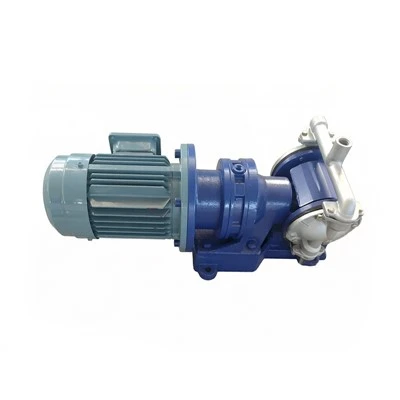
First off, let me explain what a diaphragm pump is in case you’re new to the game. A diaphragm pump is a type of positive – displacement pump. It uses a flexible diaphragm that moves back and forth to create a change in volume within the pump chamber. This movement sucks in fluid on the intake stroke and pushes it out on the discharge stroke.
Now, let’s talk about flow rate. Flow rate, simply put, is the volume of fluid that a pump can move in a given amount of time. It’s usually measured in units like gallons per minute (GPM) or liters per minute (LPM).
The flow rate of a diaphragm pump depends on a bunch of factors. One of the main factors is the size of the diaphragm. Larger diaphragms can move more fluid per stroke, which generally means a higher flow rate. For example, if you’ve got a small – sized diaphragm pump with a diaphragm that has a limited surface area, it’s not gonna move as much fluid as a pump with a larger diaphragm.
Another important factor is the stroke length. The stroke length is how far the diaphragm moves back and forth. A longer stroke length allows the pump to take in and expel more fluid with each cycle. So, pumps with adjustable stroke lengths give you the flexibility to control the flow rate according to your needs. If you need a high flow rate, you can increase the stroke length, and if you need a more precise, lower flow rate, you can decrease it.
The speed of the pump also plays a huge role. The faster the diaphragm moves back and forth, the more cycles it can complete in a minute, and the higher the flow rate. However, there are limits to how fast a diaphragm pump can operate. Running the pump too fast can cause excessive wear and tear on the diaphragm and other components, which can lead to breakdowns and a shorter lifespan for the pump.
The type of fluid you’re pumping is also a big deal. Viscous fluids, like thick oils or syrups, are harder to move than thin fluids like water. When you’re pumping a viscous fluid, the flow rate of the diaphragm pump will typically be lower compared to when you’re pumping a thin fluid. This is because the pump has to work harder to push the thick fluid through the system.
The pressure requirements of your application are another factor. If you need to pump fluid at a high pressure, the flow rate will usually be lower. This is because the pump has to use more energy to overcome the pressure, which leaves less energy available to move the fluid. For instance, if you’re using a diaphragm pump to pump water up a tall building, you’ll need a higher pressure, and this will reduce the flow rate compared to pumping the same water at a lower pressure on a flat surface.
Let’s take a look at some real – world examples. Suppose you’re in the food and beverage industry. You might use a diaphragm pump to transfer fruit juices. Since fruit juices are relatively thin fluids, you can expect a decent flow rate from a diaphragm pump. You can choose a pump with an appropriate diaphragm size and stroke length to meet your production needs. If you’re producing a large volume of juice, you’ll want a pump with a higher flow rate.
On the other hand, if you’re in the paint industry, you’ll be dealing with more viscous fluids. Paint is thick and doesn’t flow as easily as juice. So, when you’re using a diaphragm pump to transfer paint, you’ll likely need to select a pump that can handle the viscosity. You might have to sacrifice some flow rate to ensure that the pump can move the paint effectively without clogging.
As a diaphragm pump supplier, I’ve seen all kinds of applications. And one of the things I always tell my customers is to do a proper assessment of their needs. You need to know the type of fluid you’ll be pumping, the required pressure, and the desired flow rate. This will help you choose the right diaphragm pump for your specific application.
We offer a wide range of diaphragm pumps with different flow rates to suit various needs. Whether you’re a small – scale operation that needs a pump with a low flow rate for a precise application or a large – scale industrial facility that requires a high – flow pump, we’ve got you covered.
Our pumps are designed with high – quality materials to ensure durability and reliability. The diaphragms are made from materials that can withstand the wear and tear of continuous operation, and the other components are built to last. We also provide excellent customer support. If you have any questions about the flow rate of our pumps or how to choose the right one for your application, our team of experts is always ready to help.
So, if you’re in the market for a diaphragm pump and you’re wondering about the flow rate, don’t hesitate to reach out. We can work with you to figure out the best pump for your needs. Whether you need to pump water, chemicals, or any other fluid, we can provide you with a solution that offers the right flow rate and performance.
In conclusion, the flow rate of a diaphragm pump is determined by several factors, including diaphragm size, stroke length, pump speed, fluid viscosity, and pressure requirements. By understanding these factors, you can make an informed decision when choosing a diaphragm pump for your application. And if you need help along the way, we’re here as your trusty diaphragm pump supplier. Get in touch with us to start the conversation about how we can meet your pumping needs.
Diaphragm Pump References
- "Pump Handbook" by Igor J. Karassik et al.
- Articles from industry – leading pump magazines such as Pumps & Systems
Botou Hengyang Pump & Valve Co., Ltd.
With abundant experience, we are one of the most professional diaphragm pump manufacturers and suppliers in China. Please feel free to buy high standard diaphragm pump made in China here and get pricelist from our factory. All customized pumps are with high quality and competitive price.
Address: No. 159, Road 1, Development Zone, Botou City, Cangzhou, Hebei Province, China
E-mail: bthdbf@163.com
WebSite: https://www.hyoilp.com/
