If you’ve ever stood on a factory floor, watching an automatic labeling machine zip a bar code, a product expiry date, or a brand logo onto 100 items a minute, you might’ve stopped to wonder: Is there a set of global rules governing these machines? As someone who’s spent the last 12 years designing, building, and troubleshooting automatic labeling machines for food and beverage, pharmaceutical, and cosmetics brands across 17 countries, I get this question all the time. Most buyers I talk to assume big-ticket industrial equipment like this must have tight, universal standards—especially when you’re shipping machines across borders, or needing them to comply with regulations for products sold in multiple regions. The short answer? It’s complicated. There isn’t one single, global “international standard” for automatic labeling machines, but there are a web of overlapping standards, regulatory frameworks, and best practices that almost all reputable suppliers (including mine) follow to keep machines safe, reliable, and compliant. Let’s break this down, because getting this right isn’t just about checking boxes—it’s about making sure your line doesn’t go down, your product meets legal requirements, and you don’t get hit with a recall for bad labeling. Automatic Labeling Machines
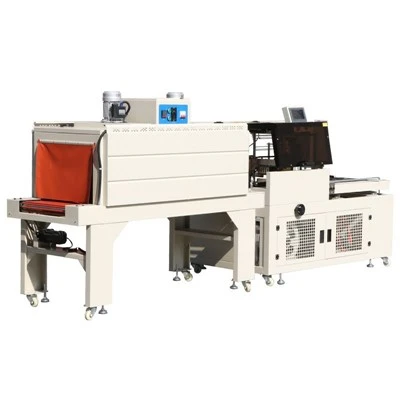
First, let’s clarify what we even mean by “standard” here. When most people say international standards for industrial equipment, they’re usually referring to standards set by bodies like the International Organization for Standardization (ISO), the IEC (International Electrotechnical Commission), or regional groups like CEN (European Committee for Standardization). For automatic labeling machines specifically, ISO and IEC have a few relevant standards, but most are cross-cutting for industrial machinery, not machine-specific. For example, ISO 12100 is the go-to global standard for machinery safety, covering risk assessment, hazard identification, and basic safety principles for all industrial equipment. That means every labeling machine I build has to meet ISO 12100:2010 requirements—no ifs, ands, or buts. That includes things like guarding moving parts so operators don’t get their hands caught, emergency stop buttons that are clearly labeled and work within 0.2 seconds, and safety interlocks that cut power to the machine if a guard is opened mid-cycle. For our team, that means we don’t just bolt on a standard E-stop; we test it across 100+ cycle variations to make sure it triggers every time, even when a machine is running at full speed for 12 hours straight.
Then there are IEC standards that govern the electrical and mechanical components inside labeling machines, which matter because most of these machines run on 220V or 480V three-phase power, and get integrated into existing factory control systems. IEC 60204-1, for example, is the global standard for electrical equipment of machines, covering everything from wiring diagrams to circuit protection to grounding. This is non-negotiable for us, because if a machine doesn’t meet IEC 60204-1, it can’t be installed in any factory that follows international electrical safety rules, and it’s a fire hazard to boot. I also make sure every control panel in my labeling machines has IEC-certified components—relays, contactors, PLCs (programmable logic controllers) that work with standard industrial protocols like Modbus or Ethernet/IP so clients can plug them right into their existing line without custom adapters. That’s a huge selling point for small to mid-sized manufacturers that don’t want to hire extra engineers to integrate new equipment.
But here’s the catch: these ISO and IEC standards are general, not specific to automatic labeling. There’s no ISO standard that dictates how a labeling machine applies a pressure-sensitive label to a round bottle with 0.5mm accuracy, or how it handles labels that tear or get stuck mid-cycle. For those machine-specific details, we have to lean into regional standards that vary a lot by country. The biggest and most influential regional set is from the European Union, because the EU has strict labeling requirements for products that are sold within its single market. For automatic labeling machines used in the EU, we have to comply with the Machinery Directive (2006/42/EC) and the Low Voltage Directive (2014/35/EU), which build on those ISO 12100 and IEC 60204-1 rules but add labeling machine-specific tweaks. The Machinery Directive, for example, requires every new automatic labeling machine sold in the EU to have a CE marking, which means it’s been tested to meet all EU safety and health requirements. That includes things like maximum noise levels (no more than 85 decibels at the operator’s station, which is a big deal because our machines used to hit 92 decibels back in 2012, before we redesigned the label unwind system) and emissions of harmful substances in materials like plastic guards.
In the United States, the standards look different, and that’s a point I hammer home to clients north or south of the border who might think a machine built for the EU works in the U.S. The U.S. doesn’t use CE marking; it follows standards from OSHA (Occupational Safety and Health Administration) for workplace safety, and ANSI (American National Standards Institute) for machinery. For automatic labeling machines, the key ANSI standard is ANSI/RIA R15.06, which covers industrial robots and robot systems, since many modern labeling machines use robotic arms to place labels on irregular shapes like jars or food pouches. OSHA also has very specific rules about machine guarding for moving parts—for example, any nip point (the spot where labels feed into the applicator roller) has to be guarded so that a finger can’t get within 1 inch of the moving parts during operation. We ran into this with a client in Chicago in 2019: their old labeling machine had an unguarded nip point that OSHA flagged during a routine inspection, so they switched to one of our machines, which has a sensor that stops the entire line in 0.1 seconds if it detects any obstruction near that area. That’s not an ISO requirement, but it’s non-negotiable for U.S. facilities.
Then there’s the elephant in the room for product labeling: regulatory standards that aren’t about the machine itself, but about what the machine is required to print or apply, which in turn dictates how the machine has to be built. For example, pharmaceutical companies selling drugs in the U.S. have to meet FDA (Food and Drug Administration) requirements for labeling, which means the label has to be applied with perfect alignment, no smudges, and the machine has to have traceability features to track every label that’s applied. A few years ago, we built a line of rotary labeling machines for a small biotech startup that was making a new insulin pen. The FDA required that every pen’s expiration date, lot number, and serial number be printed directly on the label with a resolution of 300 DPI, and that the machine log every single label application so they could trace a bad batch back to the exact machine and time it was applied. That’s not an ISO or ANSI standard for labeling machines—it’s an FDA requirement that shapes how the machine is designed: we added a built-in barcode scanner that verifies every label’s data before it’s applied, and a cloud-connected logger that stores application data for 7 years, which is exactly what the FDA requires. Similarly, in the EU, pharmaceutical labeling has to meet EudraLex standards, which are almost identical to FDA’s in many ways, so our machines for that startup needed just a small software tweak to meet EudraLex instead of FDA.
Don’t get me wrong—there are gaps, and they create headaches for suppliers and clients alike. For example, there’s no standard for label size compatibility: a machine built for 2-inch round labels might not work for 4-inch rectangular labels, even if both meet ISO 12100. And when it comes to emerging label types, like QR codes for product traceability or RFID tags for supply chain management, there are no universal standards for how the machine has to read or apply those. That’s a big reason why I encourage clients to talk through their specific needs with us before buying—not just the size of their bottles, but where their products are sold, what labeling regulations they have to follow, and what future needs they might have, like adding QR codes next year.
I’ve seen too many buyers make the mistake of just picking the cheapest automatic labeling machine, assuming it meets some vague international standard, only to run into issues down the line. A client in Mexico City bought a machine from a supplier in Southeast Asia in 2021 that claimed to be “ISO certified,” but when they tried to install it, it was built with non-CE-compliant wiring, didn’t meet OSHA’s guarding rules, and couldn’t apply labels with the alignment accuracy required for their food products. It took us 3 weeks to rewire the machine, add the proper guards, and recalibrate the label applicator, and it cost them twice the price of the original machine in downtime and repairs. That’s why as a supplier, I don’t just sell equipment— I walk clients through the standards that apply to their specific use case, whether they’re shipping to Tokyo, Toronto, or Tunis.
The good news is that most reputable suppliers, including my team, have already done the heavy lifting of aligning with all the major regional and industry-specific standards. We don’t rely on just one standard—we cross-reference ISO, IEC, ANSI, FDA, CE, and any other requirements the client has to meet, and document everything so they can show regulators when needed. We also keep our machines flexible, with easy-to-adjust settings so clients can switch between label sizes without needing a technician, and software that can be updated to meet new regulatory requirements as they come out. For example, when the EU updated its food labeling rules for allergens in 2023, we just pushed a software update to all our existing labeling machines in the field, so clients didn’t have to buy new equipment to comply.
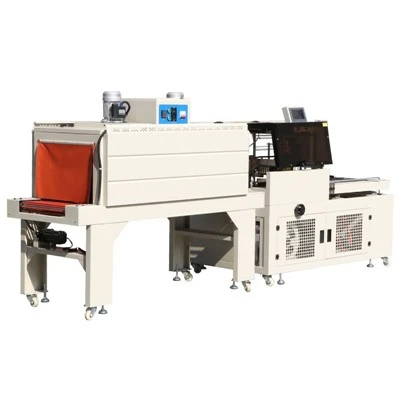
At the end of the day, the question isn’t “are there international standards for automatic labeling machines?” It’s “which standards apply to your situation?” There’s no one global rulebook, but there’s a common set of safety, electrical, and compliance standards that every reliable supplier should follow, tailored to where your products are sold and what your business needs are. If you’re in the market for an automatic labeling machine, don’t just ask for “ISO certification”—ask which specific standards your machine meets, and what that means for your operations, your downtime, and your ability to comply with regulators. I’ve spent years refining my machines to meet these standards, and I’m always happy to walk you through how my equipment can fit your needs. Whether you’re a small craft brewery looking to label bottles for the U.S. market, a pharmaceutical company needing traceable labeling for Europe, or a cosmetics brand expanding to Southeast Asia, let’s chat about how we can build a machine that’s safe, reliable, and fully compliant with all the standards that matter for your business. Reach out to get the conversation started.
Smart Packaging Systems References
- International Organization for Standardization. ISO 12100:2010, Safety of Machinery – General Principles for Design – Risk Assessment and Risk Reduction. 2010.
- International Electrotechnical Commission. IEC 60204-1:2018, Safety of Machinery – Electrical Equipment of Machines – Part 1: General Requirements. 2018.
- European Commission. Directive 2006/42/EC of the European Parliament and of the Council on machinery, and amending Directive 95/16/EC (Machinery Directive). 2006.
- American National Standards Institute. ANSI/RIA R15.06-2012, Industrial Robots and Robot Systems – Safety Requirements. 2012.
- U.S. Food and Drug Administration. Labeling and Packaging Requirements for Human Drugs and Biologics. 21 CFR Parts 201, 600, 601, and 610. 2024.
Langfang Huanqi Machinery Equipment Co., Ltd.
As one of the most professional automatic labeling machines manufacturers and suppliers in China, we also support customized service. Please feel free to buy advanced automatic labeling machines for sale here from our factory. Quality products and reasonable price are available.
Address: No. 40, Row 11, North Side of Central Street, Wangpeizhuang Village, Pingshu Town, Dacheng County, Langfang City, Hebei Province
E-mail: huanqijixie@outlook.com
WebSite: https://www.huanqiwrap.com/
