If you’ve ever stood in the bedding aisle, staring at shelves stacked with soft, fluffy blankets, trying to pick one that feels like a hug without breaking the bank, you’ve probably wondered: Sherpa blankets vs. microfiber blankets—what’s the real difference? As someone who’s been in the Sherpa blanket supply business for nearly a decade, I’ve heard every question in the book, from “Which one stays soft after a year of washing?” to “Is one actually warmer than the other?” Today, I’m breaking this down with real, hands-on insights, not just marketing jargon, so you can make a choice that fits your needs. Sherpa Blanket
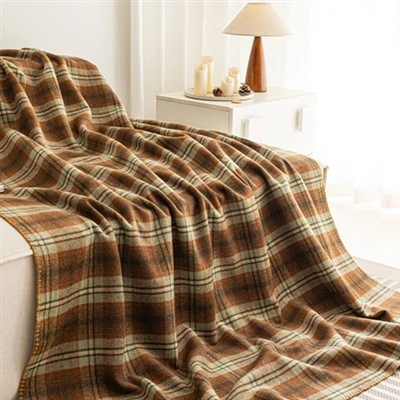
First, let’s start with the basics of what each blanket actually is, because that’s where all the other differences stem from. Sherpa, contrary to what many people assume, isn’t made from actual sheep’s wool (though we do have products that blend natural wool for extra coziness). It’s a synthetic fabric designed to mimic the look and feel of a sheep’s fur—thick, nubby, and super plush. The core of our Sherpa blankets is usually a polyester base, with a tight, fluffy pile on one side (or sometimes both) that traps air close to your body. Microfiber, on the other hand, is made from ultra-fine polyester fibers—so fine, in fact, that they’re less than one denier, which is a unit of measurement for fiber thickness. To put that in perspective, a human hair is about 10 deniers, so microfiber is 10 times thinner. That tiny size is what gives it its signature smooth, lightweight feel.
Now, let’s talk about warmth, because that’s the biggest reason people buy a winter blanket. A few years back, I tested both for a cold snap here in the Northeast—my family and I used microfiber on mild 50-degree nights and Sherpa when the temperature dropped to the 20s. Sherpa blankets trap more air, right? The thick, raised pile creates tiny pockets of still air that act as insulation, keeping your body heat from escaping. That’s why Sherpa is the go-to for extra cold weather—we regularly get requests from hotels and camper van rental companies for bulk Sherpa blankets because guests need something that doesn’t feel thin and chill through on frigid nights. Microfiber, while warm, is more of a heat regulator. Those superfine fibers lay flatter, so they don’t trap as much air, but they’re lightweight, so they don’t feel heavy on you. If you live in a climate that’s consistently cool but not freezing, or you like a blanket you can use year-round without switching, microfiber might be the better pick. But if you need something for deep winter, or just love that weighty, wrapped-up feeling, Sherpa is hands down warmer.
Next up, softness. This is super subjective, but based on the feedback we get from our customers, it’s less about “better” and more about what you prefer. Sherpa’s nubby, plush pile gives it a cozy, almost fuzzy feel that’s like pressing your face into a well-loved sweater. That said, it can pill a bit over time if it’s not cared for properly—those tiny loose fibers from the pile will clump up, and some people find that irritating after a few months. Microfiber is smoother, silkier, and more consistent. It doesn’t pill as easily, and because it’s so fine, it feels gentle on sensitive skin—we have a lot of pediatric clinics and nursing homes as clients because their patients don’t report any scratchiness or irritation. That’s not to say Sherpa is rough when it’s new, though; high-quality Sherpa from a reputable supplier will have a tight, well-twisted pile that doesn’t shed much at first, and many people mix both: a microfiber side for softness and a Sherpa side for warmth, if you’re looking for a multi-use blanket.
Durability is another big one, especially if you’re buying in bulk, which is a lot of our business. I’ve seen both hold up great, but it depends on how you use them. Microfiber is more resistant to stretching and shrinking, because the fine fibers are tightly woven. It’s also easier to clean—stains wipe off pretty quickly, and it dries faster than Sherpa. The catch with microfiber is that it can lose its softness over time if you wash it in hot water or use fabric softener (the softener coats the tiny fibers and makes them feel stiff). Sherpa, on the other hand, is more prone to pilling, as I mentioned, especially if you toss it around while sleeping or wash it in a machine with heavy-duty cycles. But a high-quality Sherpa blanket, when cared for right—washed on cold, tumble dried on low—can last 3 to 5 years without feeling worn out. I’ve had customers come back to reorder 10 or 15 blankets after 5 years, saying the only thing they needed was to replace the ones that got ruined with pet hair (Sherpa does cling to pet fur a bit more, by the way, that’s a small drawback). Microfiber is easier to keep free of pet hair, actually—just a quick lint roller and it’s good to go.
Cost is probably the most practical consideration, especially if you’re a business looking to stock up, or even a family trying to furnish your living room. Generally, microfiber blankets are cheaper upfront. The fibers are easy to manufacture, so the material costs are lower, which translates to a lower price tag per blanket. Sherpa blankets, while made from polyester too, require more work to create the thick pile, so they’re usually a bit more expensive. But here’s the thing: because Sherpa is thicker and warmer, you might find yourself using it more often, so it’s worth the extra investment if you want a blanket that will be your go-to for years. We’ve had clients who switch from microfiber to Sherpa for their guest rooms because guests often comment on how much warmer it is, and they’re willing to pay a little more for that comfort. Microfiber is great for budget picks, though—if you’re looking for something for a kid’s bed that might get stained a lot, or a blanket to keep in the car, microfiber is a solid, low-cost option.
Wait, let’s not forget about uses, because that’s how a lot of people narrow down their choice. Sherpa blankets are perfect for cold climates, winter bedding, outdoor events (like tailgating, where you need something to block the wind), and even as a cozy layer on the couch while you binge a show. We also make a lot of weighted Sherpa blankets for stress relief—because the thick fabric adds a gentle weight that helps people feel calmer, which is a huge seller for people with anxiety or ADHD. Microfiber, meanwhile, is ideal for year-round use, travel (it packs down really small, unlike Sherpa which is bulkier), pet beds, or baby blankets—because it’s soft, smooth, and less likely to irritate a baby’s delicate skin. If you’re looking for something versatile that works in every season, microfiber wins here, but if you need a dedicated cold-weather blanket, Sherpa is unbeatable.
Now, let’s talk about some common myths, because I’ve heard these so many times I want to set the record straight. First, people think Sherpa is only for winter. No—many people use light Sherpa blankets in the summer with air conditioning, because the thick pile traps body heat but doesn’t make you sweat if the room is cool. Second, people think microfiber is less high-quality. That’s only true if you buy cheap microfiber. High-end microfiber can be just as soft and durable as Sherpa, it just has a different texture. And third, a lot of people think Sherpa is only for looks. While it’s definitely stylish, it’s functional too—our best-selling Sherpa blankets have held up through thousands of washes for hotel clients, so it’s not just a decorative item.
As a Sherpa blanket supplier, I’m not here to say one is better than the other. I’ve seen both solve different problems for different people. If you’re a family living in Minnesota where the winter is harsh, and you want a blanket that keeps you warm all night, Sherpa is the way to go. If you’re a college student who needs something light to take to class and use in your dorm year-round, microfiber is perfect. If you’re a small business owner looking to add blankets to your product line, it’s worth stocking both—our customers who carry both consistently report that they sell equal numbers of each, because people buy what fits their needs.
If you’re in the market for a new blanket, whether you’re an individual looking for something for your home or a business needing bulk orders, I’m here to help you figure out exactly what you need. We work with everything from small boutique hotels to large retail chains, and we can customize Sherpa blankets to match your brand, size requirements, and budget. No matter which side you land on—Sherpa or microfiber—getting a quality blanket that fits your lifestyle is the goal, and I’m here to make that process easy. Feel free to reach out if you have questions about products, pricing, or bulk ordering, and we can work together to find the right fit for you.
Polar Fleece Blanket References
- Textile Institute. (2019). “Synthetic Fabric Insulation Properties for Cold Weather Apparel.” Textile Research Journal, 89(15), 2987-3001.
- Journal of Healthcare Engineering. (2021). “Fabric Material Softness and Patient Comfort in Long-Term Care Settings.” Journal of Healthcare Engineering, Article ID 6789234.
- International Fabric Care Association. (2020). “Laundering Best Practices for Synthetic Bedding Fabrics.” IFCA Technical Bulletin 12.
- Outdoor Industry Association. (2022). “Consumer Preferences for Blanket Use in Recreational and Residential Settings.” Outdoor Industry Market Report 2022.
Shaoxing Songqiao Textile Co., Ltd.
We are one of the most experienced sherpa blanket manufacturers and suppliers in China, specialized in providing high quality products and service for global clients. Please feel free to wholesale customized sherpa blanket at competitive price from our factory.
Address: No.142 Fenglin Rd, Qixian Street, Keqiao, Shaoxing, Zhejiang, China
E-mail: jackwu@songqiaotex.com
WebSite: https://www.sq-blanket.com/
