Hey there! I’m a supplier of alkane products, and today I wanna chat about how these awesome alkane products are produced. It’s a pretty interesting process, and I’m stoked to share it with you. Alkane Products
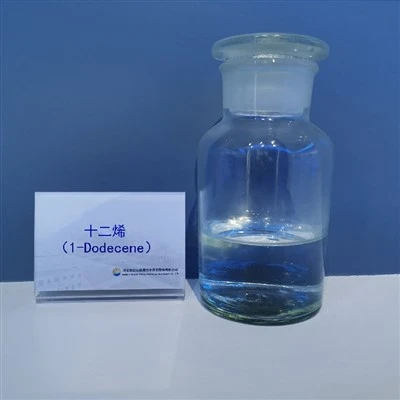
First off, let’s talk about what alkanes are. Alkanes are a type of hydrocarbon, which means they’re made up of just carbon and hydrogen atoms. They’re super important because they’re used in all sorts of things, like fuels, lubricants, and even in the production of plastics.
The main source of alkanes is crude oil. Crude oil is this thick, black, sticky stuff that’s found underground. It’s a mixture of all kinds of hydrocarbons, including alkanes, alkenes, and other compounds. When it comes out of the ground, it’s not really useful in its raw form. That’s where the production process kicks in.
The first step in producing alkane products from crude oil is called distillation. Distillation is like a big separation party. Crude oil is heated up in a distillation column, which is basically a tall tower. As the oil gets hotter, different components start to turn into vapor at different temperatures. The lighter hydrocarbons, like the smaller alkanes, turn into vapor first and rise up the column. The heavier ones stay at the bottom.
The column is set up with different trays or stages. Each stage has a different temperature. As the vapors rise, they cool down and condense at the stage where the temperature matches their boiling point. The condensed liquids are then collected from each stage. This way, we can separate the crude oil into different fractions.
The fractions we get from distillation include things like gasoline, which is mostly made up of small alkanes with 5 – 12 carbon atoms. Kerosene is another fraction, and it’s used for things like jet fuel. It has a slightly larger range of alkane molecules, usually with 10 – 16 carbon atoms. Diesel fuel is also a fraction, and it contains even larger alkanes, typically with 12 – 20 carbon atoms.
But distillation isn’t the only process involved. Sometimes, the alkanes we get from distillation need a little tweaking. That’s where cracking comes in. Cracking is a process where larger alkane molecules are broken down into smaller ones. This is really useful because there’s often a higher demand for the smaller, more volatile alkanes like those in gasoline.
There are two main types of cracking: thermal cracking and catalytic cracking. Thermal cracking is done at really high temperatures, usually around 450 – 800 degrees Celsius. In this process, the energy from the high temperature breaks the carbon – carbon bonds in the large alkane molecules. This creates smaller alkanes and also some alkenes.
Catalytic cracking, on the other hand, uses a catalyst. A catalyst is a substance that speeds up a chemical reaction without getting used up itself. In catalytic cracking, a zeolite catalyst is often used. The reaction happens at a lower temperature, around 450 degrees Celsius. The catalyst helps to break the bonds in a more controlled way, and it produces more of the desired smaller alkanes and fewer unwanted by – products.
After cracking, the products go through a process called reforming. Reforming is all about changing the structure of the alkane molecules to make them more useful. For example, it can turn straight – chain alkanes into branched – chain alkanes. Branched – chain alkanes have better combustion properties, which is great for gasoline because it leads to more efficient engines.
Reforming also involves adding hydrogen to some of the molecules. This hydrogenation process can change the unsaturated hydrocarbons (like the alkenes produced during cracking) back into alkanes. It’s like giving the molecules a little makeover to make them more suitable for our needs.
Once we’ve got the right mixture of alkanes, we might need to do some refining steps. These can include things like removing impurities such as sulfur, nitrogen, and metals. Sulfur is a big deal because when it burns in fuels, it creates sulfur dioxide, which is a major pollutant. So, we use processes like hydrodesulfurization to get rid of the sulfur. In this process, the alkane mixture is reacted with hydrogen in the presence of a catalyst to convert the sulfur compounds into hydrogen sulfide, which can then be easily removed.
After all these processes, our alkane products are pretty much ready. We can package them up and send them out to customers. We supply alkane products to all sorts of industries. For those in the fuel industry, our high – quality gasoline, diesel, and kerosene products are a great choice. They meet all the necessary standards for performance and emissions.
For the lubricant industry, we have premium alkanes that can be used to make top – notch lubricating oils. These lubricants help to reduce friction and wear in engines and machinery, which extends their lifespan and improves their efficiency.
If you’re in the plastics manufacturing business, our alkanes are a key raw material. They can be used to produce all kinds of plastics, from the simple polyethylene bags to more complex engineering plastics.
So, if you’re in need of alkane products for your business, whether it’s for fuel, lubricants, plastics, or any other application, I’d love to talk to you. We’ve got a great range of products that are made with high – quality standards and the latest production techniques. Just reach out to me, and we can start a conversation about your needs and how we can work together.
Glycol Ethers References
- "Petroleum Refining Processes" – A textbook that covers the basics of crude oil refining and alkane production.
- "Hydrocarbon Chemistry" – A scientific book that delves deeper into the chemistry of alkanes and related processes.
Hebei Xinxinyuan Energy Co., Ltd.
Hebei Xinxinyuan Energy Co., Ltd. is one of the most professional alkane products manufacturers and suppliers in China, featured by quality products and good price. Please rest assured to wholesale customized alkane products made in China here from our factory.
Address: Zhongjie Industrial Park, Huanghua City, Cangzhou City, Hebei Province, China
E-mail: atl2066@qq.com
WebSite: https://www.xinxinyuanfr.com/
