Hey there! I’m a supplier of various acids, and you know, one question that often pops up when folks are dealing with acids is how temperature can mess with their strength. It’s a super interesting topic, so I thought I’d chat about it right here on this blog. Acid
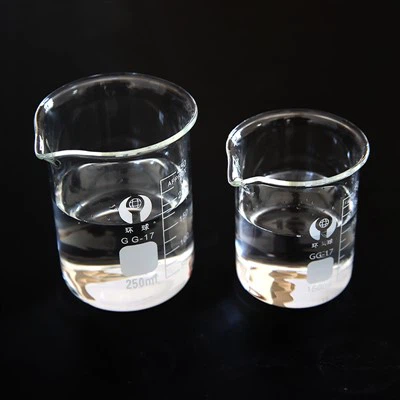
Let’s start with the basics. What do we mean by the strength of an acid? Well, simply put, acid strength refers to how readily an acid can donate a proton (H⁺ ion) when it’s dissolved in water. Strong acids, like hydrochloric acid (HCl) and sulfuric acid (H₂SO₄), dissociate completely in water. That means almost all of their molecules break apart to release H⁺ ions. Weak acids, on the other hand, only partially dissociate. Acetic acid (CH₃COOH), the main component in vinegar, is a good example of a weak acid.
Now, how does temperature fit into this picture? Temperature can have a pretty significant impact on the dissociation of acids, and thus their strength.
The Effect of Temperature on Strong Acids
For strong acids, things are a bit straightforward at first glance. Since they already dissociate completely in water at normal conditions, you might think that temperature wouldn’t change much. But that’s not entirely true!
When you increase the temperature, you’re basically adding energy to the system. In the case of strong acids, this extra energy can speed up the rate at which the acid molecules interact with water molecules. The increased kinetic energy makes the collisions between the acid and water more frequent and more energetic.
Let’s take hydrochloric acid as an example. At room temperature, HCl dissociates completely in water like this:
HCl(aq) → H⁺(aq) + Cl⁻(aq)
When you heat up the solution, according to Le Chatelier’s principle, the system will try to counteract the increase in temperature. In the case of an exothermic dissociation process (like the dissociation of HCl, which releases heat), increasing the temperature will shift the equilibrium slightly towards the reactants. That means a tiny bit of the H⁺ and Cl⁻ ions might recombine to form HCl molecules. However, the effect is usually very small because the dissociation of strong acids is so favorable under normal conditions. So, while the change in the concentration of H⁺ ions is negligible, the rate of any reactions involving the H⁺ ions can increase significantly because of the higher energy of the particles.
The Effect of Temperature on Weak Acids
Weak acids are where things get a bit more interesting. The dissociation of weak acids is an equilibrium process. For acetic acid, the dissociation equation is:
CH₃COOH(aq) ⇌ CH₃COO⁻(aq) + H⁺(aq)
This reaction is endothermic, which means it absorbs heat. According to Le Chatelier’s principle, when you increase the temperature of a weak acid solution, the equilibrium will shift to the right to absorb the extra heat. That means more acetic acid molecules will dissociate, releasing more H⁺ ions into the solution.
As a result, the strength of the weak acid effectively increases with temperature. The pH of the solution will decrease because there are more H⁺ ions present. For example, if you have a 0.1 M acetic acid solution at room temperature (around 25°C), its pH is about 2.88. But if you heat it up to, say, 50°C, the proportion of dissociated acetic acid molecules will go up, and the pH will drop a bit.
On the other hand, if you lower the temperature, the equilibrium will shift to the left. Fewer acetic acid molecules will dissociate, and the concentration of H⁺ ions will decrease. The acid will seem "weaker" at lower temperatures.
Practical Implications
As an acid supplier, understanding how temperature affects acid strength is crucial for our customers.
In industrial processes, temperature control is often a key factor. For example, in pickling processes where acids are used to remove rust and scale from metal surfaces, the right temperature can make a big difference. If the temperature is too low, weak acids might not be strong enough to do the job effectively. But if it’s too high, strong acids could cause excessive corrosion.
In chemical synthesis, the reactivity of acids due to temperature changes can affect the yield and quality of the final product. Chemists need to know exactly how an acid’s strength will change at different temperatures to optimize their reactions.
Real – World Examples
Let’s look at some real – world scenarios where temperature and acid strength play important roles.
-
Battery Acid: In lead – acid batteries, sulfuric acid is used as the electrolyte. The performance of the battery is affected by temperature. At low temperatures, the dissociation of sulfuric acid decreases, and the battery’s ability to deliver power is reduced. On the other hand, high temperatures can cause the acid to be more reactive, which might lead to faster corrosion of the battery components.
-
Food and Beverage Industry: In food preservation and flavoring, acids like citric acid and acetic acid are commonly used. The acidity of these products can change with temperature. For example, when you heat up a vinegar – based sauce, the increased dissociation of acetic acid can alter the flavor profile and its preserving properties.
Conclusion
So, as you can see, temperature has a definite impact on the strength of acids, whether they’re strong or weak. For strong acids, temperature mainly affects the reaction rate and has a minor effect on the equilibrium. For weak acids, temperature can significantly shift the dissociation equilibrium, changing the acid’s strength and the pH of the solution.
If you’re in an industry that uses acids and need to understand how temperature might affect your processes, or if you’re just looking for high – quality acid products, don’t hesitate to reach out. We’re here to help you find the right acid solutions for your needs and provide you with all the information you need to make the most of them.
Contact us for more details and let’s start a conversation about how we can work together to meet your acid requirements.
Anhydride References
- Petrucci, R. H., Herring, F. G., Madura, J. D., & Bissonnette, C. (2017). General Chemistry: Principles and Modern Applications. Pearson.
- Atkins, P., & de Paula, J. (2014). Physical Chemistry for the Life Sciences. Oxford University Press.
Handan Huajun Chemicals Co., Ltd.
We’re well-known as one of the most experienced acid manufacturers in China, featured by quality products and good service. Please rest assured to wholesale bulk customized acid at competitive price from our factory. For quotation and free sample, contact us now.
Address: East Side of Ziyang Avenue, New Material Industrial Park, Shoushansi Township, Guantao County, Handan City, Hebei Province
E-mail: sales@huajunchem.com
WebSite: https://www.huajunchemhd.com/
